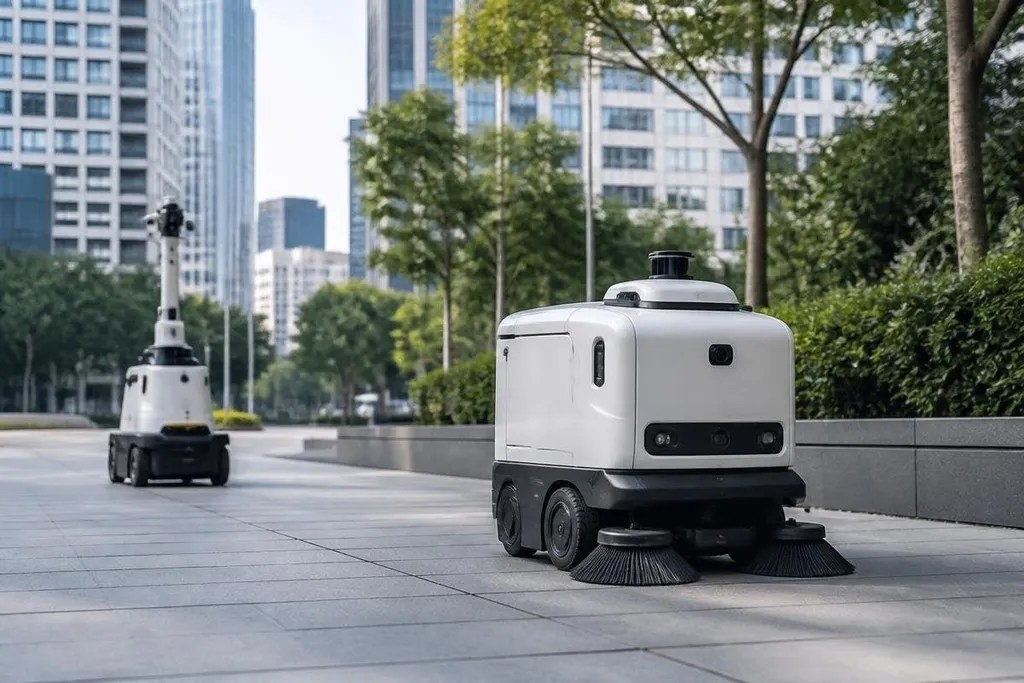
A street-cleaning robot can repeat the same route for hours, while a security robot can send staff a live view of a closed site. Those tasks may reduce routine work, but they also place cameras, sensors, and moving machines in shared public spaces.
For a city manager, the useful question is narrower: where does a robot solve a real problem without creating a larger one?
Quick read
- Robots can handle repeated routes, inspections, and site checks.
- Cameras and location data can create privacy and security risks.
- A safe trial needs a clear task, a human fallback, and public reporting.
Where city robots can help
The best fit is a task with a fixed goal and a clear point of failure. A robot that checks a fenced water facility has a smaller job than one that moves through a busy town square, because its route, users, and risks are easier to define.
Street cleaning, waste checks, road inspections, and grounds work can all use mobile robots in the right setting. The robot may carry a camera, LiDAR, or another sensor. LiDAR measures distance with pulses of light, helping the system map nearby objects and avoid contact.
That sensing can give a city a record of blocked paths, damaged surfaces, or overflowing bins. Staff can then send people to the places that need a closer look. The gain comes from better task selection, not from removing people from the process.
Robots can also work in places that are unpleasant or unsafe for routine visits. A machine can inspect a narrow service area or check a site after an incident while trained staff remain at a safer distance.
The city still needs a plan for recovery when the robot loses its route, hits an object, or stops with a full battery.
Where the risks begin
Public streets are hard for machines because people do not move in neat patterns. A child may run across a path, a cyclist may pass from behind, or a person using a mobility aid may need more space than the robot expects.
A machine that works well on an empty test route may behave differently around crowds, rain, glare, road works, and temporary signs. Those conditions can affect cameras, wireless links, wheels, and route maps. The city should publish the test conditions instead of presenting a short demonstration as proof of safe daily use.
Privacy brings a separate problem. A robot may record faces, voices, vehicle plates, or the layout of private property even when those details are not needed for its task. The operator needs rules for collection, storage, access, deletion, and requests from law enforcement.
Cybersecurity matters too. A connected robot has software, radios, accounts, and service tools that someone may try to misuse. Before the machine enters public service, the city should know who can stop the robot, change its route, view its data, and install updates.
The human role stays in the system
Each city robot should have a named operator and a clear handoff to a person. That person needs a live status view, an emergency stop, and a way to reach people near the machine. Remote control can help, but a weak network may delay commands or cut the link.
The public also needs a plain explanation of what the robot records and why. Signs can identify the operator and give residents a contact route. Public notice cannot fix poor data rules, but silence makes a small trial harder to assess.
A city team weighing a public robot trial can use smart city robotics reporting to check the machine’s task, test date, data collected, and measured result. Those details give the buying checklist a clear starting point.
A safer buying and trial checklist
Before approving a city robot, ask the project team to:
- Name one task and one place for the first trial.
- Record what the sensors collect and how long the city keeps it.
- Set a stop rule for contact, route loss, sensor failure, or public complaints.
- Assign a person who can take control and remove the robot.
- Publish test results, faults, repairs, and changes to the plan.
- Show how the city will end the trial if the results do not justify further use.
This checklist moves the discussion from a robot’s appearance to its work record. It also gives residents a way to judge the trial before the city buys more machines.
I'd approve a small deployment only when the task is narrow, the data rules are public, and staff can stop the robot without delay. The next useful measure is not how many robots a city buys, but how many routine tasks they complete without a safety, privacy, or service failure.